

Electronic Parking Brake Explained: How and When to Use It in Your Nissan
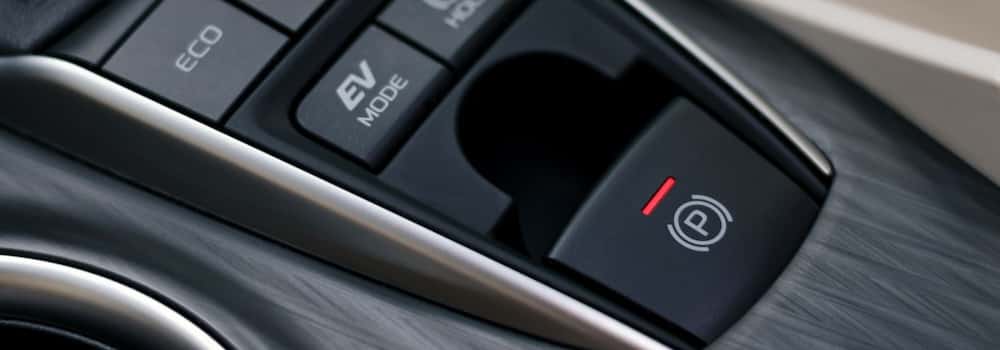
Nissan’s Electronic Parking Brake replaces traditional mechanical hand levers and foot pedals with an electric servo-motor system controlled by a toggle switch on the center console. When activated, electric actuators mounted directly to the rear brake calipers extend to clamp the brake pads against the brake rotors, locking the rear wheels mechanically in place. The system integrates with the vehicle’s electronic control unit and anti-lock braking system to monitor vehicle motion, pedal input, seatbelt status, and gear selection to automatically clamp or release the brakes.
Unlike older handbrake systems that rely on steel cables prone to stretching or snapping over time, an Electronic Parking Brake uses precise electrical signals to deliver consistent clamping force every time it is activated. Drivers engage or disengage the brake using a console switch located behind the gear selector. Pressing or pulling this switch signals dedicated electric motors to press the rear brake pads firmly against the disc rotors with uniform pressure, holding the vehicle stationary on flat ground or steep grades.
When the parking brake engages, a red indicator light illuminates both on the console switch itself and as a red PARK icon within the instrument cluster display. The system communicates continuously with onboard safety modules. If the engine is running, the driver seatbelt is buckled, and the transmission is shifted into Drive or Reverse, pressing the accelerator pedal triggers an automatic release, allowing seamless departure without touching the switch.
Drivers traversing heavy traffic on Florida Ave often ask how the system handles quick stops and hill parking during daily travel. To experience this braking technology on a test drive or inspect system operation firsthand, stop by our North Florida Avenue showroom or give our team a quick call to speak with a representative.
How Do You Manually Engage and Release the EPB in Your Nissan?
To manually engage the Electronic Parking Brake in a Nissan vehicle, pull up on the console switch until the red indicator light turns on in the instrument cluster; to manually release it, switch the ignition on, press firm pressure on the brake pedal, and push down on the console switch until the light turns off.
While the manual control offers direct driver operation, Nissan vehicles also include an automatic drive-away release feature designed for daily convenience. For automatic disengagement to occur smoothly, four conditions must be met:
- The engine must be running with the vehicle turned on.
- The driver seatbelt must be securely buckled.
- The transmission must be shifted out of Park into Drive or Reverse.
- The driver must gently depress the accelerator pedal.
Once these conditions are satisfied, the electric motor actuators withdraw the rear brake pads automatically, allowing the vehicle to roll forward or backward without manual switch manipulation. If the driver seatbelt is unbuckled, the automatic release feature disengages as a safety precaution, requiring manual switch operation with the foot brake applied.
Manual control remains functional even when the ignition is switched off, allowing drivers to secure the vehicle after parking. However, releasing the brake manually always requires active ignition power and direct foot-brake pressure to prevent unintended rolling. Modern models like the 2026 Nissan Rogue equipped with a 1.5L engine and Xtronic transmission incorporate this exact setup to simplify daily driving.
Buyers exploring our certified pre-owned inventory or completing an online application to get pre-approved for financing can test these controls in person on any model equipped with console brake controls.
Pricing
Pricing by trim
| Feature | Dark Armor | Dark Armor AWD | Platinum AWD | Rock Creek AWD |
|---|---|---|---|---|
| Base MSRP | $33,340 | $34,740 | $39,390 | $34,390 |
| Destination charge | $1,575 | $1,575 | $1,575 | $1,575 |
Pricing (continued)
| Feature | S AWD | S FWD | SL AWD | SL FWD |
|---|---|---|---|---|
| Base MSRP | $30,890 | $29,490 | $36,990 | $35,590 |
| Destination charge | $1,575 | $1,575 | $1,495 | $1,495 |
Pricing (continued)
| Feature | SV AWD | SV FWD |
|---|---|---|
| Base MSRP | $31,890 | $30,490 |
| Destination charge | $1,575 | $1,575 |
What Is Nissan Automatic Brake Hold and How Does It Function Alongside EPB?
Nissan’s Automatic Brake Hold feature keeps the vehicle stationary at a complete stop without requiring continuous foot pressure on the brake pedal, automatically transitioning control to the Electronic Parking Brake if the stop exceeds three minutes or if safety conditions change.
Activated by pressing the AUTO HOLD button located near the shifter while the driver seatbelt is fastened, the system displays a white indicator light in the instrument cluster to confirm standby mode. Once the vehicle comes to a complete halt, the light turns green, signifying that hydraulic pressure is actively being held at all four wheels. When the driver presses the accelerator pedal, hydraulic pressure releases instantly, allowing smooth acceleration through stop-and-go conditions.
The system interacts directly with the Electronic Parking Brake through a series of automated safety protocols. While Automatic Brake Hold relies on primary hydraulic brake pressure during temporary pauses, it automatically transfers holding duties to the electromechanical parking brake under specific conditions:
- The vehicle remains stopped continuously for more than three minutes.
- The driver unbuckles their seatbelt.
- The driver opens the driver-side door.
- The engine or ignition is turned off.
This seamless transition ensures that primary hydraulic components are not held under constant high pressure during extended stops, while keeping the vehicle securely anchored via the rear caliper actuators. The Automatic Brake Hold feature resets to off every time the ignition is turned off, requiring manual re-activation via the console button at the start of every new trip. Drivers navigating stop-and-go Tampa commutes often find this feature eliminates leg fatigue at long traffic signals.
Does an Electronic Parking Brake Hold Better on Hills and Prevent Wheel Lockup?
An Electronic Parking Brake holds better on steep inclines than a manual hand lever because electronic sensors measure the exact grade angle and command maximum torque from electric actuators, while integrated anti-lock modulation prevents wheel lockup if applied during motion.
On steep hills, traditional mechanical handbrakes rely entirely on physical muscle strength to pull a steel cable. Variations in cable stretch or loose lever engagement can allow a vehicle to slip. Nissan’s electronic system eliminates human variation by evaluating incline sensors and applying uniform clamping pressure directly to the rear brake discs. On severe grades, the electronic control module commands maximum electric motor torque, securing heavy models like the 2026 Nissan Pathfinder with its 3.5L engine and automatic 9-speed transmission without driver exertion.
When pulled while the vehicle is in motion, the parking brake switch functions as an emergency deceleration tool. Instead of locking the rear wheels instantly—which could cause a spin or loss of control—the module communicates with the anti-lock braking system. The system alternates rapid hydraulic braking cycles across all four wheels to slow the vehicle down smoothly and safely while preserving full steering ability.
Key performance benefits of electronic holding systems on grades include:
- Uniform clamping torque applied by electric motor actuators on both rear brake calipers.
- Incline-sensing logic that prevents vehicle roll-back during steep starts.
- Controlled emergency deceleration integrated with anti-lock safety software during motion.
When Should You Service Your Nissan Electronic Parking Brake Hardware?
Service for Nissan Electronic Parking Brake hardware follows standard brake inspection schedules, with specialized attention required for electric caliper actuators, wiring harnesses, rear brake pads, and electronic brake fluid flushes every 20,000 to 30,000 miles.
Because electric motors are mounted directly onto the rear brake calipers, replacing rear brake pads requires putting the system into an electronic service mode. Standard hydraulic pad retraction tools cannot be used manually on electric caliper pistons; attempting to force the caliper piston back without initiating service mode via diagnostic equipment can ruin the internal motor assembly and actuator gears.
Routine maintenance items for the braking assembly include:
- Inspecting rear brake pads and rotors for even wear across inner and outer surfaces.
- Checking electrical wiring harness connectors at the rear calipers for corrosion, water intrusion, or physical damage.
- Verifying electronic control module communication during routine multi-point inspections.
- Flushing brake fluid periodically to remove moisture and maintain hydraulic stability for Automatic Brake Hold performance.
Drivers should schedule a professional inspection if the red PARK warning light flashes, a yellow brake warning icon remains lit on the dash, or an unexpected mechanical grinding sound occurs during switch activation. Keeping electrical connections clean and maintaining fresh brake fluid ensures reliable operation across all driving conditions.
Common Questions About Nissan Electronic Parking Brake Operation
Q: What indicator lights show that the electronic parking brake is active?
When the system is engaged, a red illuminated PARK text or park icon appears on the instrument cluster display alongside a red LED light on the console switch. If the light flashes rapidly, it indicates a system fault or incomplete engagement requiring inspection.
Q: Can the electronic parking brake be engaged when the engine is turned off?
Yes, the parking brake can be applied manually by pulling up on the console switch even when the engine is switched off. Releasing the brake, however, requires turning the ignition on and depressing the brake pedal firmly.
Q: Why does the electronic parking brake not release automatically when stepping on the gas?
Automatic drive-away release requires four conditions: engine running, transmission in Drive or Reverse, driver seatbelt fastened, and accelerator depressed. If the driver seatbelt is unbuckled or a door is open, the system disables auto-release and requires manual switch operation with the foot brake applied.
Q: Does Automatic Brake Hold stay turned on every time you start your Nissan?
No, Automatic Brake Hold automatically turns off whenever the engine or ignition is switched off. Drivers must manually press the console AUTO HOLD button at the start of each drive to re-enable the feature.
Q: What happens if your vehicle battery dies while the electronic parking brake is engaged?
If the main battery loses charge completely, the electric actuators remain mechanically locked in their last state. Power must be restored using a jump start or battery replacement before the electronic actuators can disengage the rear brake pads.
Explore Nissan Electronic Parking Brake Models at Maus Nissan of North Tampa
The Electronic Parking Brake and Automatic Brake Hold technology are available on select Nissan vehicles. Midsize sedans like the 2026 Nissan Altima 2.5 SR starting MSRP 28,980featurea2.5LenginewithanEPA-estimated26city/36hwyMPG.Crossoverbuyerscanselectthe2026NissanRogueDarkArmorstartingMSRP33,340 with a 1.5L engine yielding 29 city / 36 hwy MPG, while larger families can step up to the 2026 Nissan Pathfinder Platinum 2WD starting MSRP $49,790 featuring an EPA-estimated 21 city / 27 hwy MPG.
Our factory-trained technicians and sales specialists are ready to demonstrate electronic brake operation, auto-hold settings, and drive-away release features on any model in our showroom. Drivers can explore our current new Nissan inventory online to see available trims and packages.
To schedule a test loop or speak directly with our team, contact us by phone or visit us in person:
- Call our sales and service department at (813) 723-5218 to ask questions or reserve a test drive.
- Find directions to drop by our North Florida Avenue showroom to compare models firsthand.
Prices and MSRP referenced in this article are estimates for informational purposes only and do not constitute an offer to sell. See dealer for complete details. Fuel economy estimates shown may differ from official EPA ratings and should not be relied upon as a guarantee of actual vehicle performance.

0 comment(s) so far on Electronic Parking Brake Explained: How and When to Use It in Your Nissan